

There is a problem with the study of architectural proportion, in that it’s often both uncertain and annoyingly tentative. Buildings contain a lot of geometry. You can ‘discover’ an awful lot of proportional relationships without ever being really confident that that they mean anything. Hermeneutics approaches apophenia — where exactly are you drawing that rectangle? Is that particular datum really the right one? At one point in Form, Space and Order, Francis Ching offers two equally valid and unrelated decompositions of the Parthenon facade into derivations of the Golden Section. Why stop there? Others are available. But does any of it get you any closer to understanding how the system actually works?


Some designers — like Palladio or Le Corbusier — have outlined their particular systems explicitly. Edwin Lutyens never did — although his interest in proportional systems is well known. There is a letter in which he rhapsodises about Palladio’s system of proportional ratios for spaces,1 and his son Robert wrote a rather mysterious text predicting that the world would one day ‘discover the true nature of his father’s proportional system.’ To my knowledge, this hasn’t happened yet.2
Lutyens’ architecture is appreciated by real fans of architecture but he’s never been wholly fashionable. In cool points terms, it’s better to be an esoteric fascist or extreme religious maniac than a conservative, an imperialist, or a social climbing Little Englander in the era of ‘International Style.’ His buildings have an unarguable presence or charisma that makes them recognisable on sight. The quintessential Lutyens-ishness of the work must be partly about brilliance, partly about fluency, partly about personality and judgement. But I’ve always thought some of it must also be the system.
Grids, Layers, Magic Rectangles
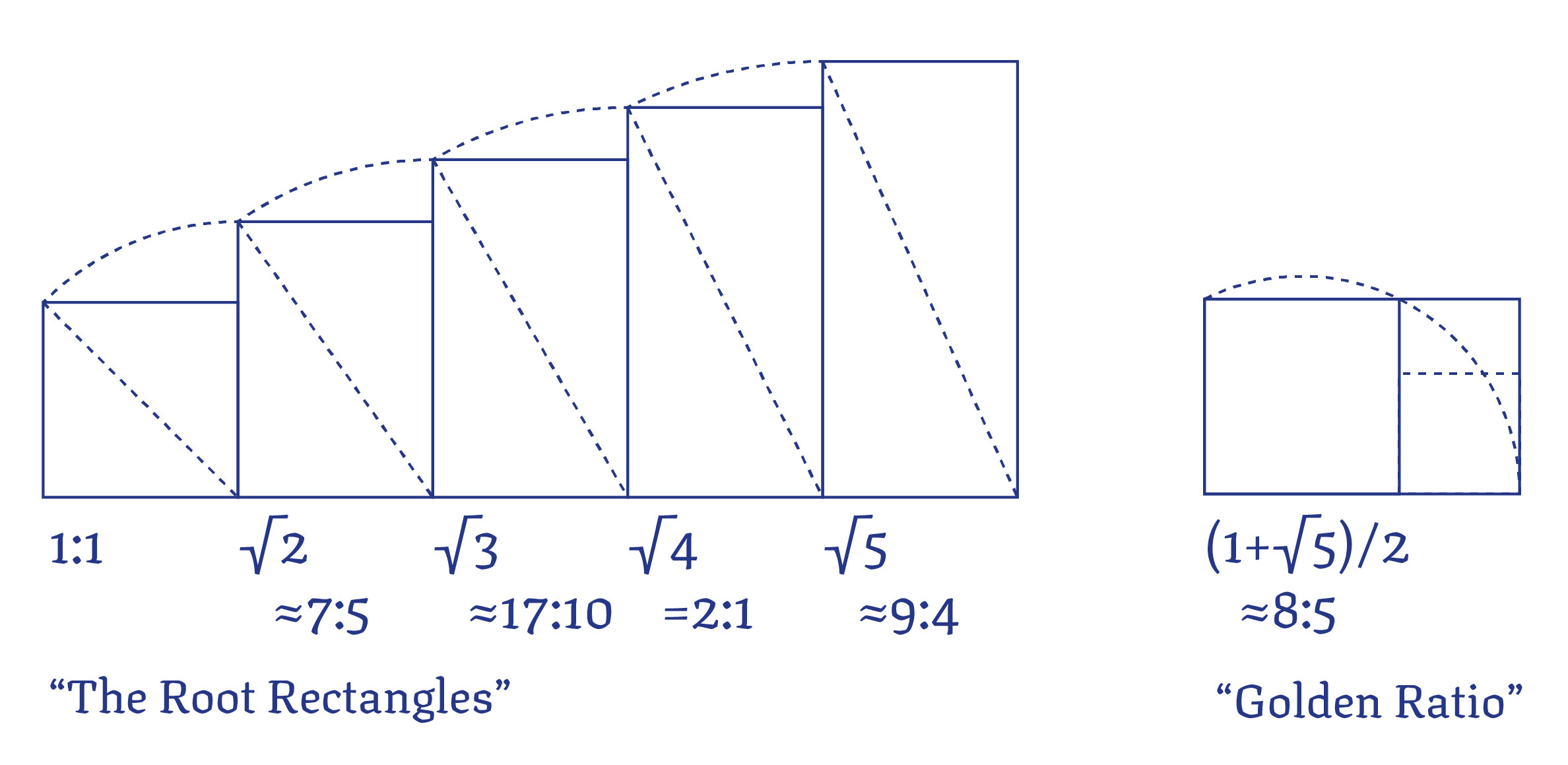
The system, such as we can identifying it, seems to be about a personal take on a set of existing tools, rather than a new discovery. The ‘golden ratio,’ Palladio’s set of ‘ideal’ ratios (1:1, 3:2, 5:3, etc), and the so called ‘root rectangles’ — whose proportions are 1:√2, 1:√3, √4 and √5, are all mentioned. The √2 rectangle — familiar to fans of the ISO/DIN paper standard — is a bit of a Lutyens trademark. He also tended to set out with the help of 1/8” squared paper, and on that basis I imagine he used a lot of these figures via approximations (shown in the image above).
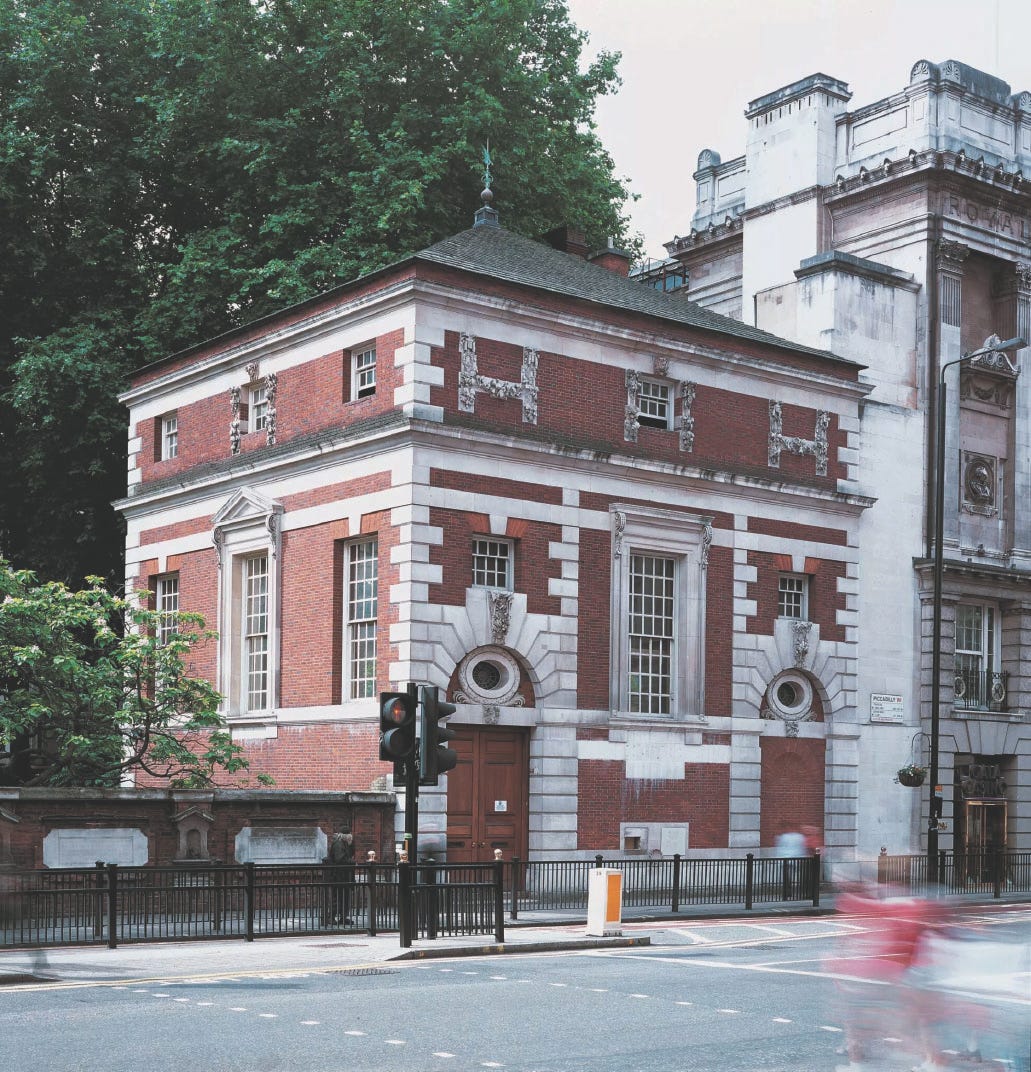
I had a bit of time one afternoon this week and decided to have a go at decoding one of Lutyens lesser works — the former Midlands Bank on Picadilly. It is pretty simple internally, and most of the interest is in the main facade. Like all of Lutyens’ buildings, it has a degree of dramatic resolution, well-composed and fully worked out, but with just a little bit of drama or tension that leads the eye and maintains the interest. It bears a noted resemblence to Sanmicheli’s Porta San Zeno, but I think it takes as much from the Royal Palace at Greenwich — the red brick baroque of Hawksmoor’s Royal Naval Hospital, and the little cubic pavilion of Inigo Jones’s Queen’s House (the interior is a literal quotation from the latter).

I don’t think I’ve fully worked out the method, but there are one or two obvious tricks:
Lutyens likes to determine a grid and work within it;
he defaults to a set of simple proportional rectangles which are accomodated within the grid;
at first the proportions are defined across the entire space of the facade, but as the composition is increasingly defined by areas of horizontal and vertical mass, the proportional units instead sit ‘within’ the subfields between these elements;
there are different ‘levels’ of geometry: the primary, ‘setting out’ geometry, the form of the envelope and structure, and the ‘perceptual’ geometry of the facade as a composition of light and colour: the proportional system interacts with all of these.
Other studies of Lutyens buildings have focussed on plans — I’m much more interested in the elevations, which I think are where the character of Lutyens architecture really emerges.
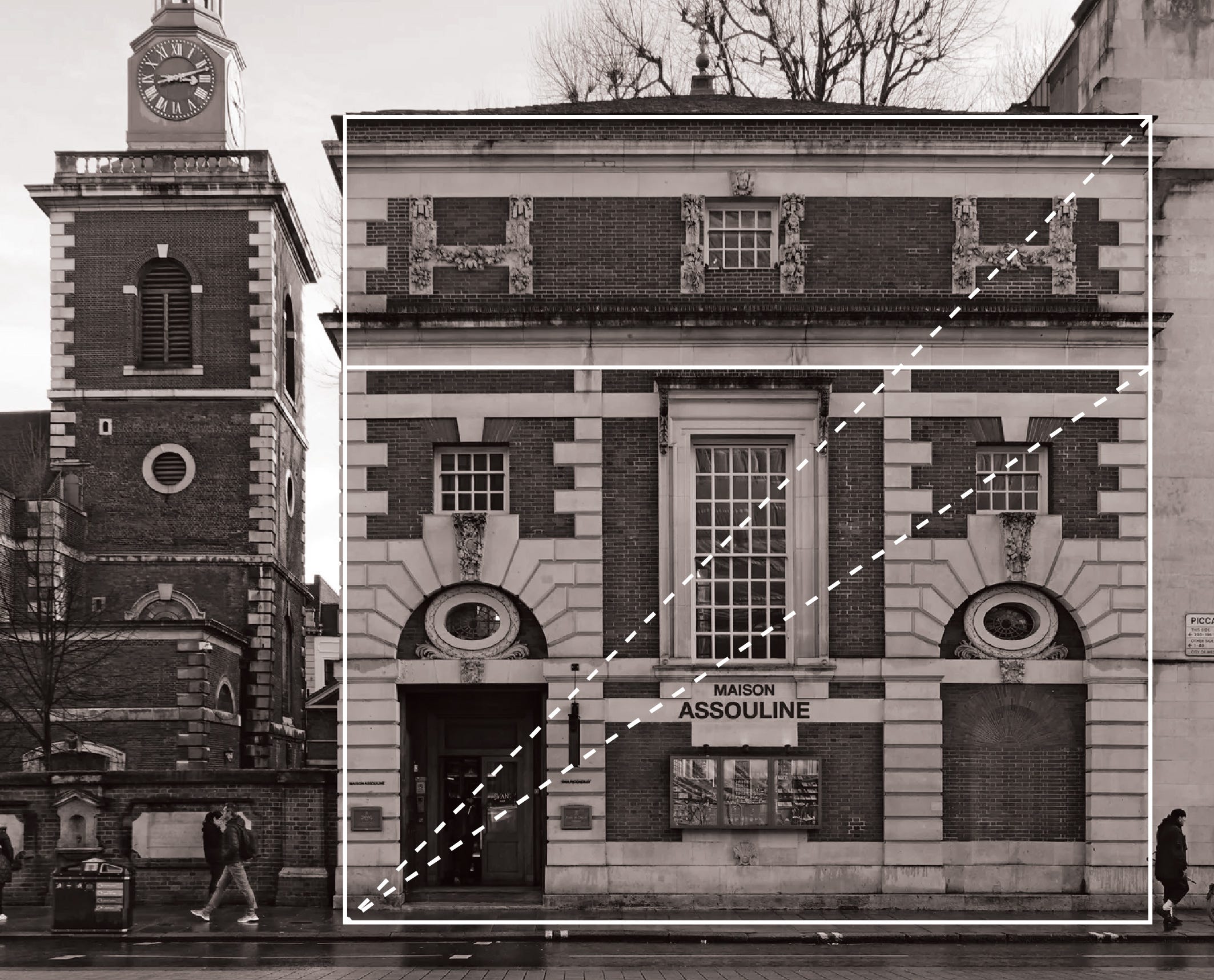
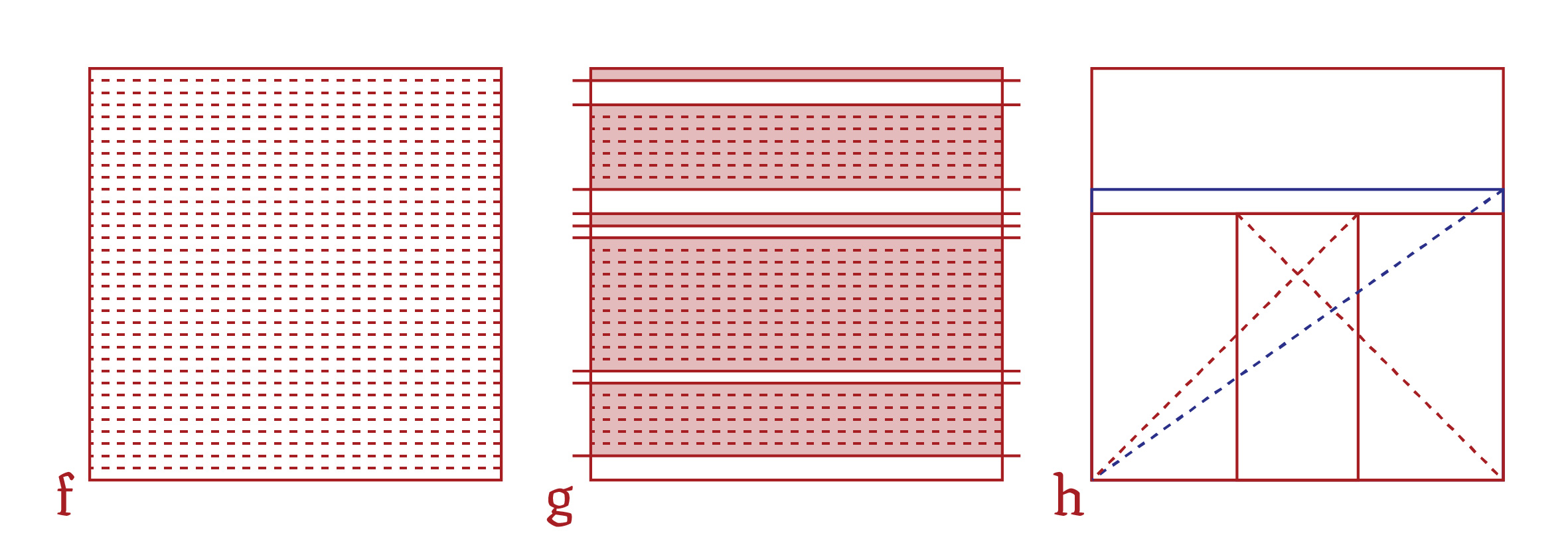
First of all, the facade is basically square, with a pediment about three quarters of the way up. If you look at the proportions, the lower part is a √2:1 rectangle whose long side is the base of the square (b). The lower part of the elevation is divided into three with the middle bay slightly wider than the side bays. A simple way to generate this is to draw a square in either corner of the lower rectangle (c). The overlapping area is the middle bay. A similar effect can be produced by rotating the square and rectangle 90 degrees around its centre (e).
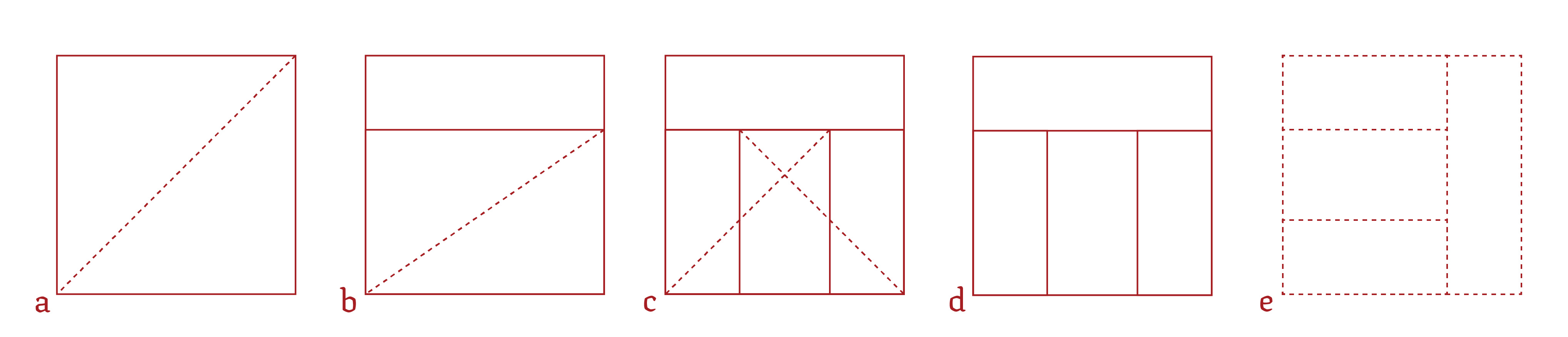
The proportional games work in parallel with the grid. The elevation is divided vertically into 34 equal bands (f). Often in the strictest sense the geometry lines up on either side of one of these bands (h). This works because there’s a perceptual ambiguity about where the start or end of an element is. Is the bottom of the cornice where it actually springs out, or does it include the unbroken course of stone beneath it? It’s both — this ambiguity is rather characteristic. We have a distinction between the formal and perceptual geometry — the bands of stone and the bricks (g) are part of the same wall surface, but the stone tends to blend with the cornice while the brick stands out. There are moments where the alignment of a given proportional figure can be with the top or the bottom of a particular band — both are available. In a sense, Lutyens’ approach to composition is actually graphic — like the grid system of a page.
There are two other manouveurs which seem worth noting. One is the use of a more or less congruent rectangle as a generator, a kind of moving or flipping operation. The outer bays have a bottom heavy emphasis, which is inverted in the middle bay — a kind of counterpoint pivoting eccentrically around the horizontal band of Portland stone above the entrance door. These bands wrap onto the side elevation, but the rhythm flattens out and the windows regularise. It’s very elegant little trick, subtle, precise, assured (see the image at the top).
The other is more like a nesting of similar shapes within one another — often the relationship of an opening to its surrounding bay or mass. The proportions of the door align with those of the lower bay up to the top of the keystone of the arch. The big central window frame has the same proportions as the bay it sits within.
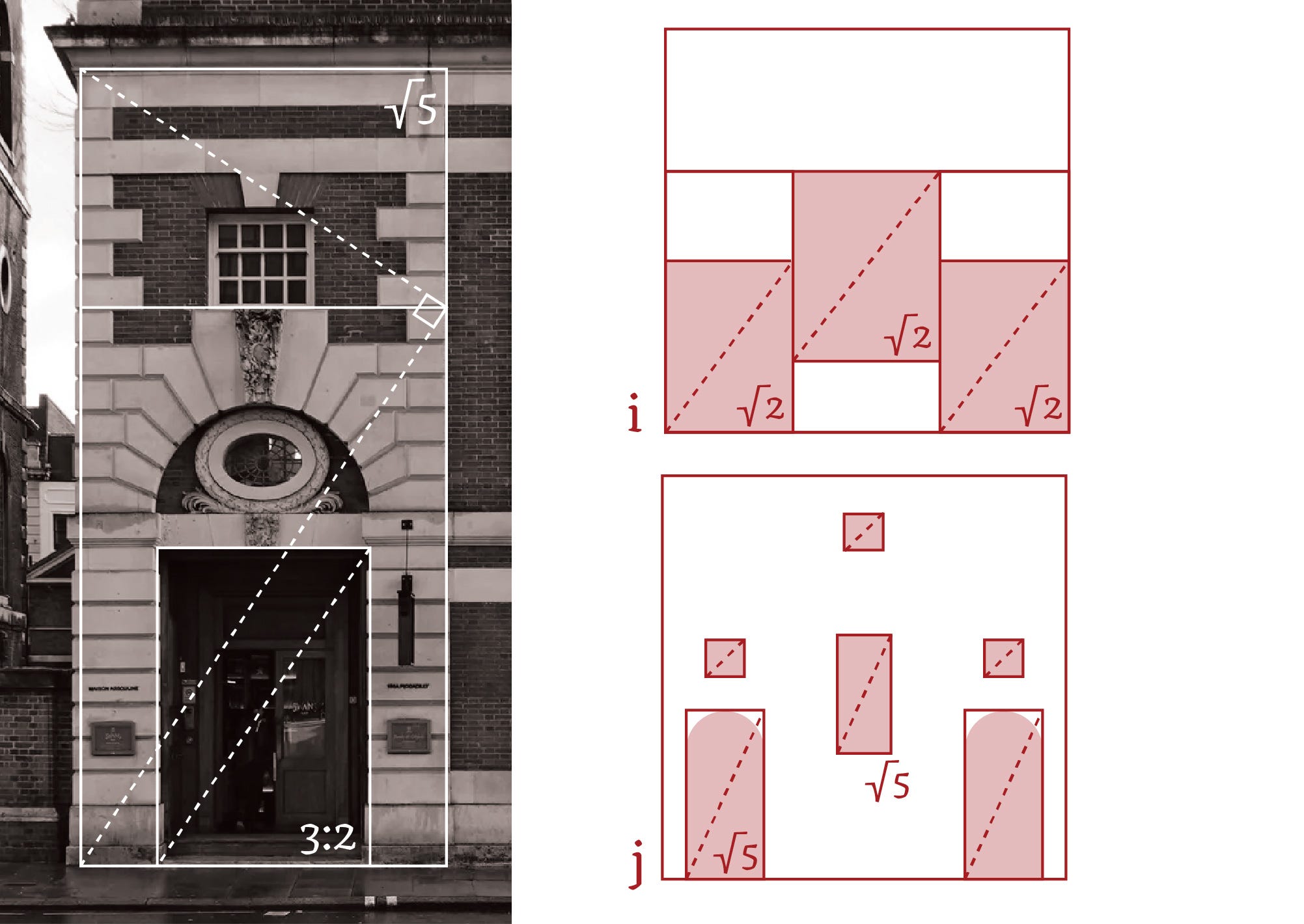
But the strict logic of these proportional laws is constantly being eroded by little perceptual tricks. The central window is actually a bit higher than the two on either side. The top is about 6 inches further up and the bottom cuts into the stone course below. There is a perceptual understanding here — you don’t really read the opening so much as the black of the window panes themselves, which do read as aligned. It also makes the window a more or less perfect √5 rectangle — the same proportion as the doorway including the arch (j).
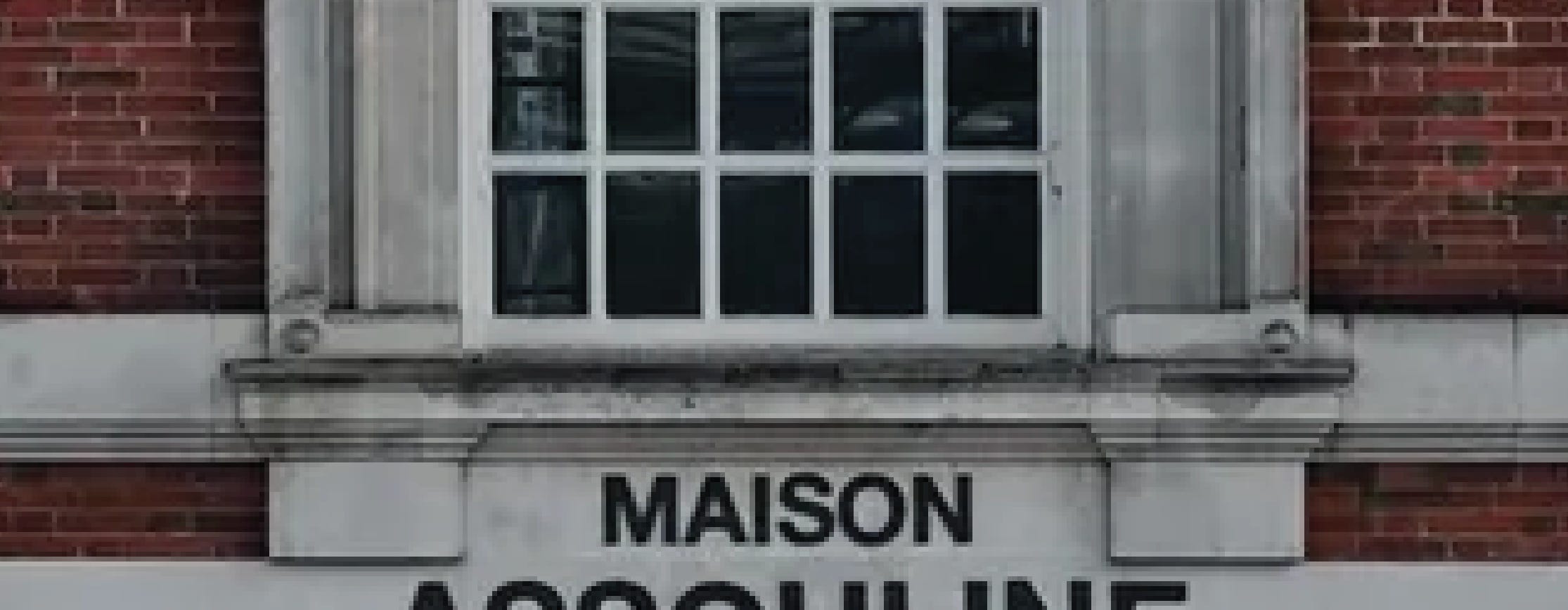
The facade is properly speaking harmonious in that the relation between the elements is dynamic. They overlay and counterbalance one another. The perceptual and formal orders are playing counterpoint.
This perceptual / formal distinction in proportion isn’t unique to Lutyens. The Greeks knew that proportion had to work perceptually as well as formally, hence the entasis — or slight thickening of the middle of the column — which was said to visually ‘straighten’ it where it would otherwise seem to taper. But Lutyens approach seems like a generalisation of this principle, an expansion of the possibilities of a perceptual reordering of classicism.
Two final thoughts:
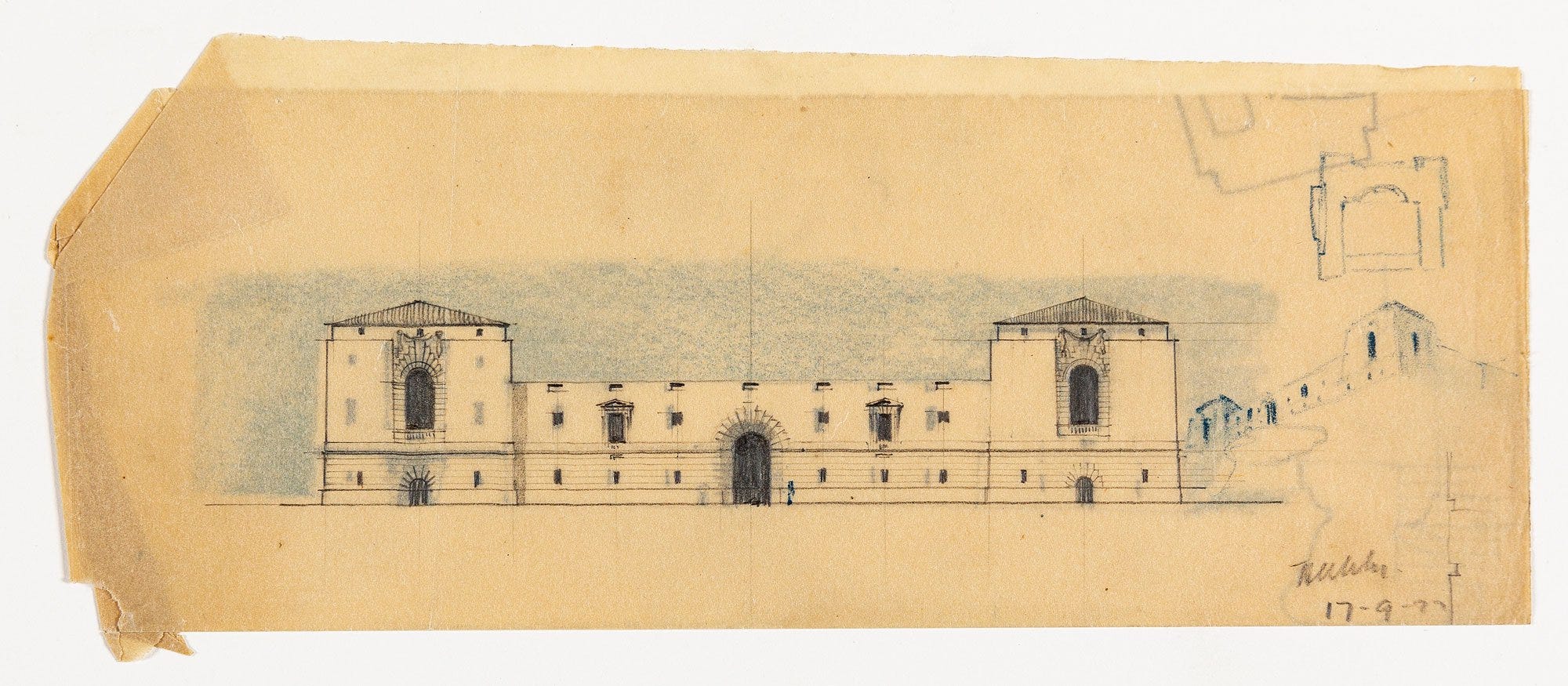
The initial compositional kernel — the square + √2 combination — turns up everywhere in Lutyens. It’s quite obvious in the towers of this unbuilt scheme in Spain. It’s in the end elevation of the Merchant Navy Memorial. It’s a fundamental geometric figure but it can easily be overwritten or suppressed. It isn’t sacred so much as extremely useful.
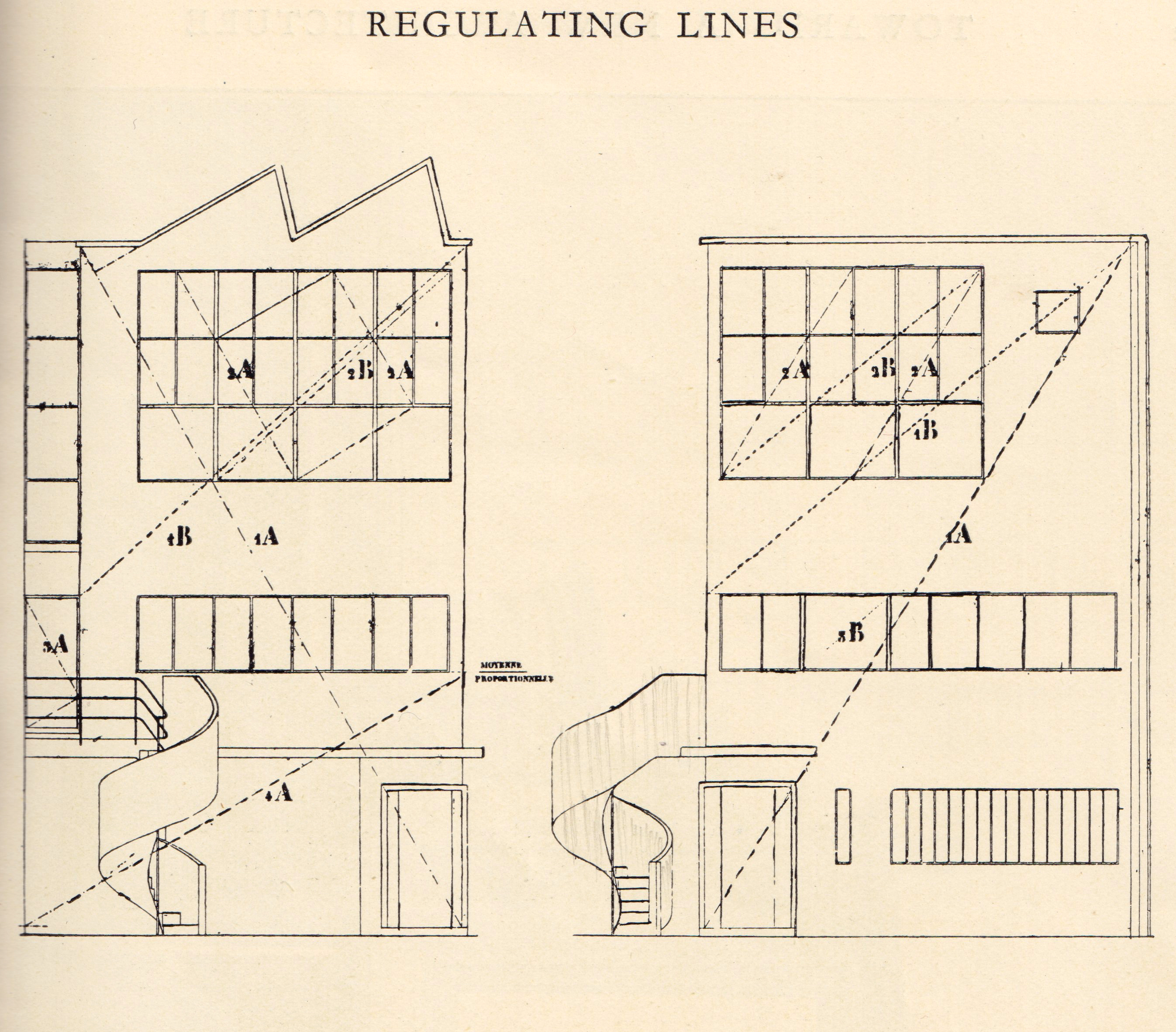
It’s one of history’s weird synchronicities that at the same time Le Corbusier was espousing (and claiming to have rediscovered) a system of ‘regulating lines,’ many principles of which Lutyens must in essence have shared.
Thanks for reading. I’m trying out a few experiments on this Substack to see what makes sense. Let me know any thoughts if you somehow find yourself here!
Which he seems to have used
Robert Lutyens’ text — An Appreciation in Perspective (1944) — is reckoned to be a little abstruse, with a bit more of the author than the subject in it, but its central contention — the act of design as the manipulation of planes — seems like it might actually be quite profound. I need to read it properly.
A lot of good work here, nice one. I analysed Goddards, a Lutyens house in.. Sussex (?) for a part 2 thesis, a much more Arts and Crafts-esque building than the Midland Bank, (which I didn't know of until now, thanks) .. Anyway, for me, Lutyens was so skilled, your comment about proportional schemes being useful to him makes sense. He could skip from one language to another, and give them his own vernacular with it seems great ease.
The thing I remember most about Goddards is a splay in the plan which gives strong perceptual effect, a sort of false perspective, subtly applied to this mediaevalist Edwardian confection.. and all done so tastefully darling!
As you say, he constantly tweaks and nudges elements to enrich the composition. And his hand is always detectable.